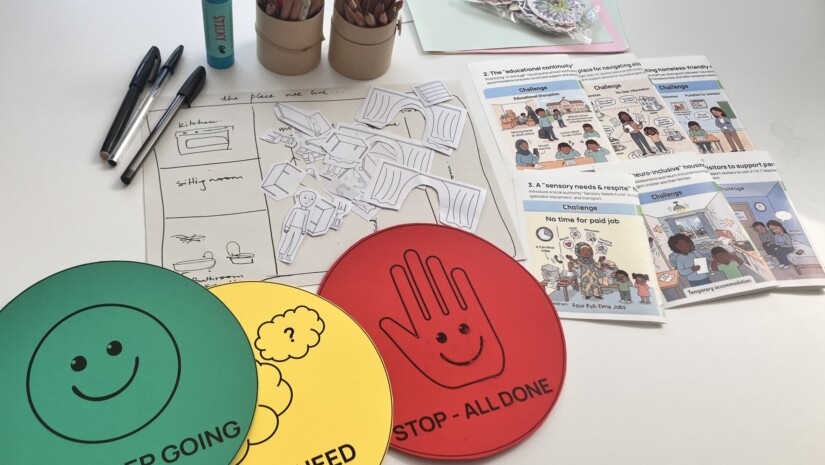
It is estimated that between 25,000 and 120,700 neurodivergent children are currently living in temporary accommodation across the UK. However, these children remain largely invisible to public eyes and to many policymakers. Homelessness in families with children is very different from the individual homelessness many have pictured in their head. These families are often placed in rooms in shared occupation housing, hotels or B&Bs, crowded into a room that does not support basic needs of cooking, toilet training, learning to talk, playing or doing homework. Families can be asked to move home, frequently, with 48 hours’ notice and moved to a borough miles away from anyone they know. It is not surprising that these children face a greatly increased risk of poorer education and health outcomes than their peers. Yet, not many know what a childhood growing up in temporary accommodation looks like or even feels like. Within this already difficult situation, if the child is neurodivergent, their needs can be easily overlooked or compromised as the family struggles to put a roof over their head. Current national policy frameworks and service delivery practices treat housing instability and neurodiversity in isolation. Consequently, the specific needs of these children remain structurally invisible, which drives the urgent need for research and more tailored interventions.
In 2026, we partnered with CHAMPIONS research programme and Bridges Outcomes Partnerships Foundation to explore ways to better support neurodivergent children aged 7–11 and their families living in temporary accommodation (TA). The primary objective was to identify opportunities for future intervention, service redesign, and system improvement to support these vulnerable families. Our research sought to build a deeper understanding of how housing insecurity interacts with neurodiversity, identifying practical opportunities for actionable change.
Co-creating with families and professionals
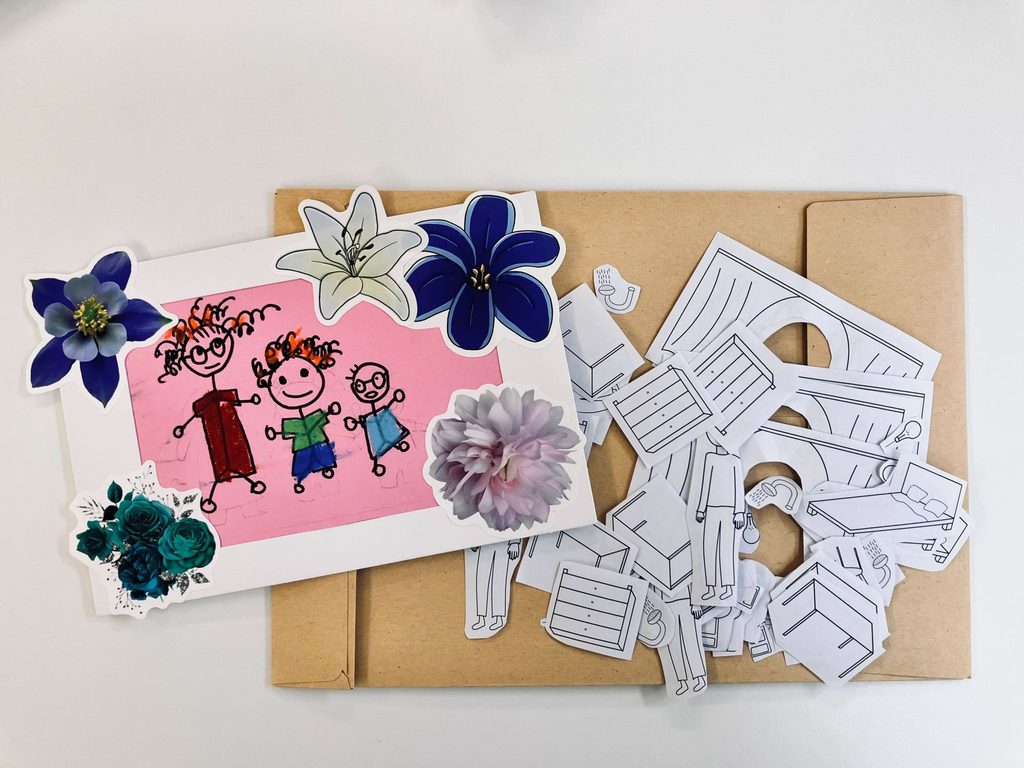
To truly understand the complexity of such disadvantages, our research is built on the foundation of over 5 years of research and advocacy work in childhood homelessness generated by Prof Monica Lakhanpaul and Prof Nadia Svirydzenka from the CHAMPIONS programme. Within the scope of this study, we focused on the lived experiences of families raising neurodivergent children in TA and insights from frontline SEN support service-providing staff who support families on a daily basis. We conducted consultation sessions with 10 families living in temporary accommodation, alongside five frontline professionals from the local authority, children’s centres and schools. We engaged families in mapping and art-making exercises, which allowed them to provide reflective feedback based directly on their lived experiences. We then used visual cluster techniques to analyse their stories and collaborated with various stakeholders in workshops to prioritise intervention opportunities. What makes our approach highly impactful is this commitment to centring the voices of parents, carers, and children, embedding their lived experience at the heart of service design rather than relying on top-down assumptions.
A systemic wrap-around approach
The core challenge identified in our research is that families are frequently forced to act as coordinators between fragmented housing, education, health, and community systems. Our proposed opportunity does not rely on creating entirely new services, but instead establishes a systemic wrap-around model that improves how existing services connect and collaborate to reduce duplicated efforts and miscommunication. We developed a theory of change framework featuring five interconnected pillars for actionable change. This high-level approach focuses on integrating multi-agency decision-making, establishing shared information frameworks, and building preventative, coordinated responses. By treating the family’s ecosystem holistically, our proposal aims to ease the exhausting administrative burden on parents and enable professionals to intervene proactively.
Actionable insights for long-term societal impact
The insights generated from this study are designed to disrupt the cycle of poverty and crisis. Our colleagues at Bridges are to take the outputs forward to design pilots within the five pillars to help local authorities, schools and healthcare professionals to move beyond reactive crisis management toward proactive, integrated support. Ultimately, this framework offers a pathway to reduce the long-term social and economic costs of fragmented public services. By addressing housing instability and ensuring educational and healthcare continuity together, we hope to offer a different approach to break generational cycles of disadvantage.
“Working with Stby and the CHAMPIONS research programme brought together complementary expertise in design research, childhood health and outcomes-based service development. This genuinely collaborative approach enabled us to listen closely to families and frontline professionals, translate their experiences into practical opportunities for change, and develop a strong foundation for interventions that Bridges can now take forward with local authorities and delivery partners”
– Programme Director, Bridges Outcomes Partnerships
Design research for meaningful and positive change
This project is a perfect example of Stby’s core purpose: driving meaningful and positive change through design research. Recently, our work has gradually shifted more towards making a social impact with our expertise and human-centred approach. By exploring the complex, intersectional challenges of homelessness and neurodivergence with contextual sensitivity and empathy, we are excited to bring forward actionable recommendations that champion a more human, fair, and inclusive society. We believe in taking a stand on urgent social issues, and this collaboration demonstrates our commitment to generating value that catalyses long-term, systemic transformation for the communities who need it most.
“What a tremendously thoughtfully prepared piece of research that you and your team have been a part of. Hopefully, this will help families access help and advice much sooner and minimise risks of escalation to possible homelessness and start a process of ensuring families are in suitable, safe homes. On a personal note, it will really help me think about my approach when I work with families facing these obstacles and try to make their access to support better based on their individual circumstances.”
– Triage Officer