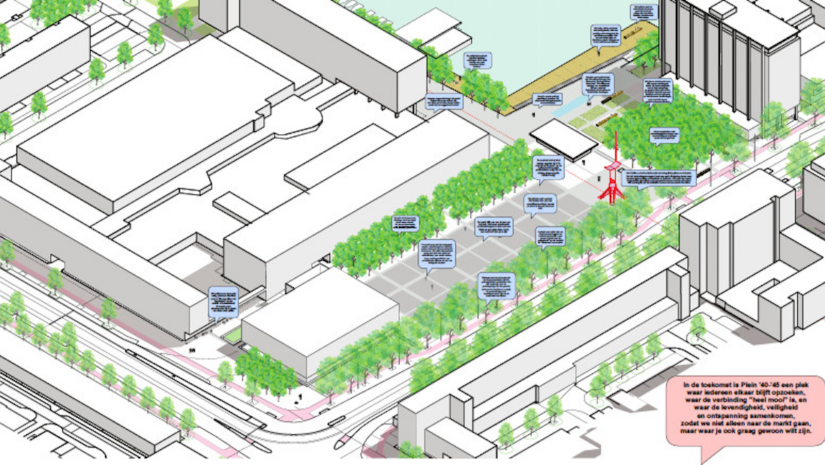
A central square in the west of Amsterdam is up for redevelopment. This part of the city was built in the 1950-60s as a radical extension of the old, overcrowded city centre. The then modern buildings (apartment blocks, shops, sports facilities and community centres) are being renovated in a gradual program of evaluation and renewal.
Revitalising a “concrete colossus”
The main square in the area is a central hub with a daily market, a shopping centre and a war monument. It is a vast space, but not a very inviting environment. Many people in the area call it a “concrete colossus”. The local council, responsible for the redevelopment and in the process of creating a plan, realised that not only a technical redesign would be needed but also the perspectives and ideas of residents, visitors and market traders about their visions for the square’s future.
The local council was already aware of an apparent disconnect between the physical infrastructure of the square and the social needs of the current diverse community in the area. The redesign of this square offered an opportunity to explore future stories from different types of users of the square (residents, visitors, businesses) with a special focus on engaging the wide mix of age, gender, occupation, training, income and cultural backgrounds in the area. The municipality was looking for a way to address the “soft side” of urban redevelopment—focusing on social cohesion, safety, and a sense of belonging. They asked Stby for support in ensuring that the square can truly become a place where many kinds of people like to be and spend some time.
Feeling at home on the square – what does that actually mean for the different people using it?
Deepening connections with local communities
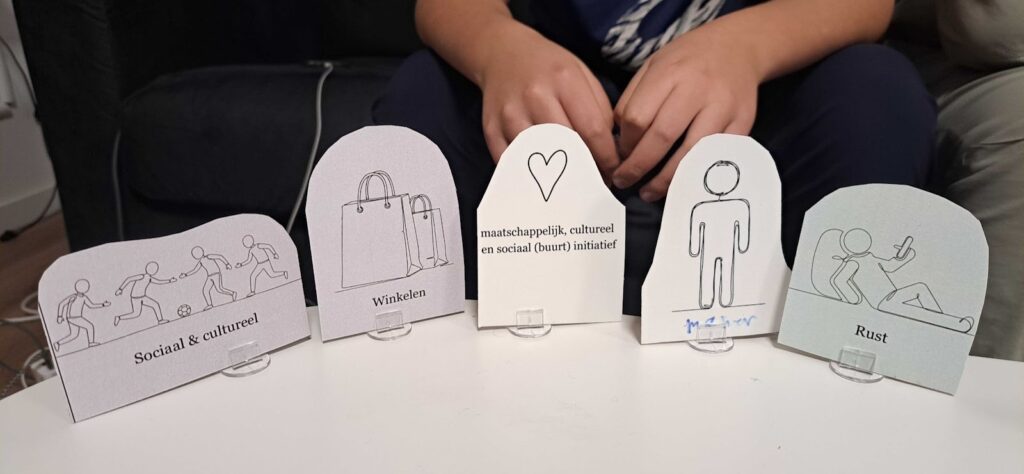
We adjusted our ‘Streetlab’ methodology to this specific situation, facilitating six co-creative group sessions with a broad mix of 56 participants, including youth, mothers, elderly residents and market traders. By using visual tools like large-scale maps and pictographic cards, we enabled participants to move beyond general statements about the square and rather share specific lived experiences. This process allowed for the exploration of both the current “as is” situation and the speculative “to be” situation in the future, encouraging participants to find common ground for a shared urban environment. We also went to visit different communities at their own gatherings. This also enabled the municipality to build stronger connections with groups they don’t often speak to.
A shared future vision for inclusive public space
This extra effort of involving communities that are often underrepresented paid off. The synthesis of the many individual future stories we collected resulted in a collective “Duture story of the square,” a human-centred vision that deepens and enriches the official policy-driven documents. The results highlight three critical pillars for development: a physical transformation from a concrete space to a green oasis; the fostering of social inclusion through more inviting and safe “chill spots” for youth; and an evolution of the market to ensure long-term economic vitality. This shared vision empowers the municipality to implement changes that reflect the community’s desire for a vibrant, safe and inclusive social hub. A public space where people want to stay and meet others.
Right now, I only come here because I have to get my shopping done. I’d love for it to be a spot where you actually plan to meet a friend for a coffee or a chat, rather than just a place where you happen to run into someone while carrying your groceries.