
From design challenges to impact
Stby’s longtime partner What Design Can Do (WDCD), is an international organisation that seeks to accelerate the transition to a sustainable, fair and just society using the power of design. Since 2015, WDCD has created design challenges for the international creative community to tackle the world’s most pressing issues. Over the last decade, they have crafted a process that makes a difference in the lives of designers working towards climate and social impact.
The project aims to help people move their impact-driven projects forward, advocate for the power of design, and collaborate across disciplines
With financial support from ClickNL and academic insight from the Centre of Expertise Creative Innovation, WDCD, and Stby conducted retrospective research that looked into the last seven design challenges in order to identify key learnings about how the WDCD design challenge process can support designers in making a meaningful impact. The result of this research process has been Design for Change: a knowledge platform that distils ten years of experience into accessible, actionable, and transferable insights for anyone working at the intersection of design, climate, and social justice.
Turning a decade of work into insightful content
The central task for Stby was to excavate, structure and translate the extensive knowledge embedded within WDCD’s decade of practice into material that others could learn from and apply. This process unfolded through several key stages.
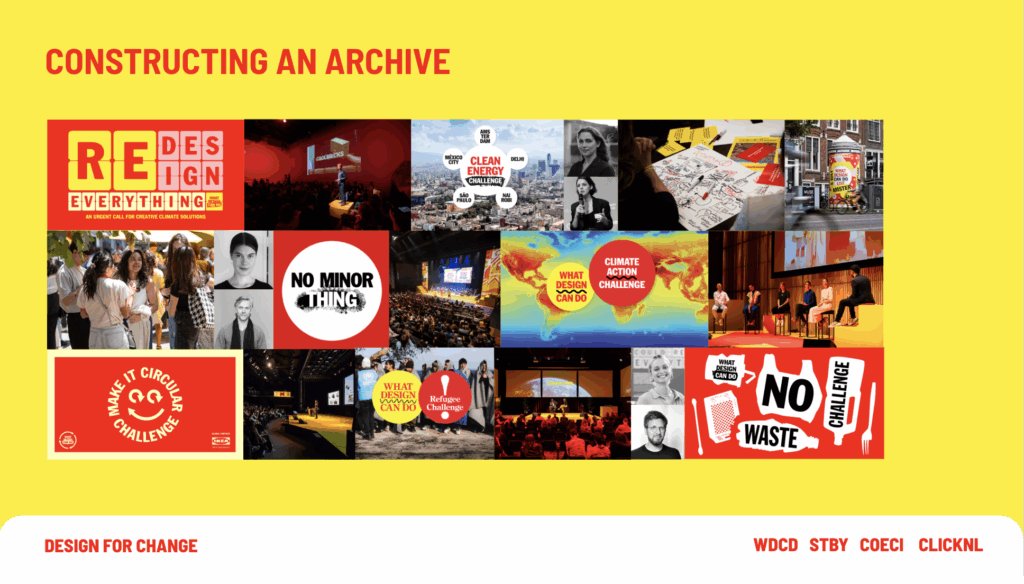
Constructing the archive
The first step involved gathering and mapping WDCD’s extensive body of work, including documentation, challenge materials and reflections from the team and partners to create a comprehensive archive.
Organising and making sense of the archive
Once assembled, the archive was systematically analysed to uncover recurring themes, methods and learnings. Through collaborative workshops and interviews, the team interpreted these findings and aligned them with the experiences of designers and organisations working in social and climate innovation.
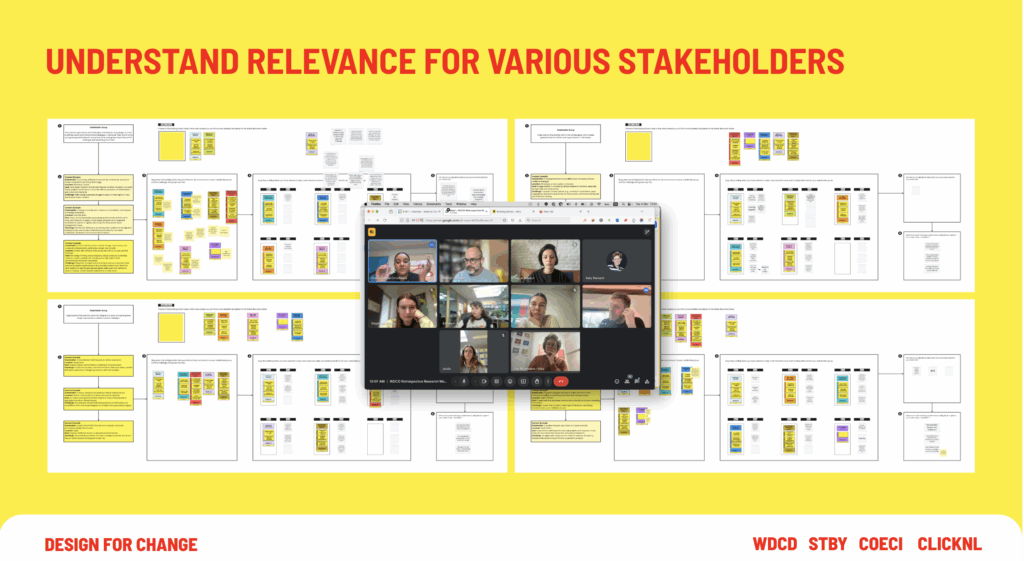
Understanding relevance across stakeholders
To ensure the resulting insights resonated widely, the team explored how different audiences, from designers and educators to NGOs and policymakers, could engage with and benefit from the knowledge. This helped frame the content to be practical for both creative practitioners and organisations seeking to integrate design into their social and environmental initiatives.
Making the knowledge actionable and transferable
A key aim of the project was to make WDCD’s knowledge accessible, actionable and transferable. The insights were written, refined and designed to serve as a flexible guide, enabling others to adapt WDCD’s approaches within their own contexts and communities.
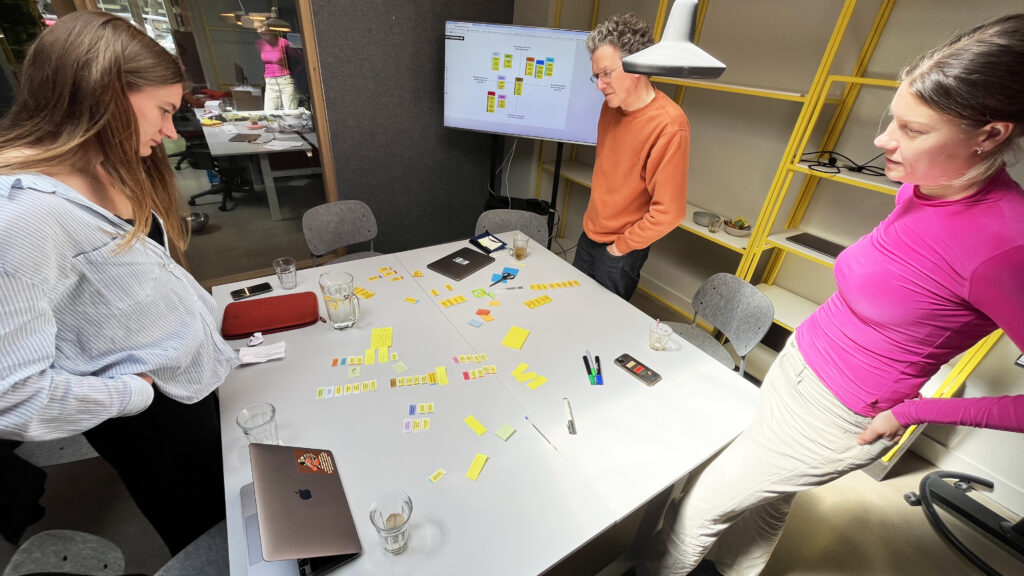
Validating and refining the knowledge product
The team prototyped and tested early content and design directions with stakeholders, refining the materials to ensure clarity, usability and value. This iterative process helped shape the final Design for Change platform into a living resource that supports collaboration, reflection and real-world application.
Sharing knowledge to help others make meaningful change
Design for Change was launched during the Mission Days at Dutch Design Week 2025 in Eindhoven and is now live at designforchange.info. The platform captures WDCD’s decade-long journey of using design as a driver for climate and social impact and turns it into a shared resource for the wider community. It offers lessons, tips and stories and methods that empower others to move their impact-driven projects forward, advocate for the power of design and collaborate across disciplines. Some of the topics are “Exploring and Scoping”, “Creating a Narrative”, “Collaborating with Partners” and “Measuring Impact”, subjects that will resonate with many changemakers in and outside of design.
Martijn de Waal, professor Civic Interaction Design at Amsterdam University of Applied Sciences and collaborator on the project said: “What I like is that the guide is both ambitious and modest in this approach: Ambitious in laying out the various roles design can play. Modest in pointing out the particular aspects of challenges that design can play a role in (campaigning, developing concrete products or services, systems thinking), while leaving others to policy or engineering.”
By transforming reflection into action, Design for Change contributes to a growing global movement that sees design as a catalyst for meaningful and just transitions.