How can citizens collaborate more effectively with local authorities to reach climate emergency and adaptation targets? This was the focus of a series of meetings hosted by Stby during London Climate Action Week in 2025 and 2026. The conversations revolved around the importance of ongoing exchange and collaboration.
Collaborations between citizens and local authorities
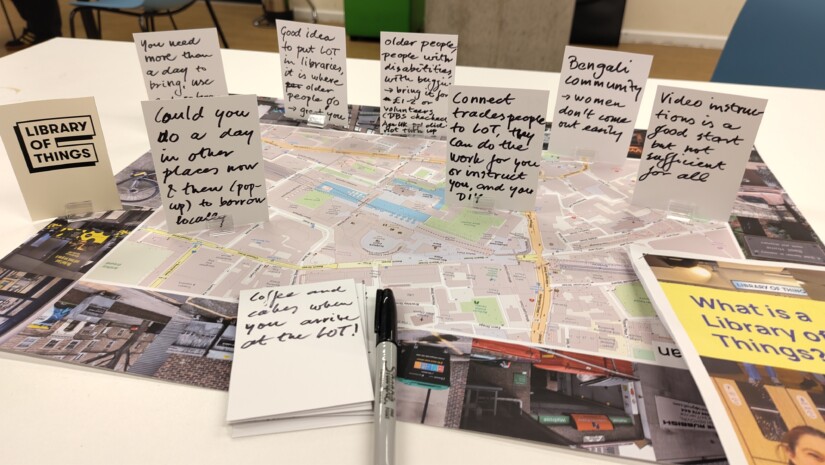
Earlier this year we worked on a project with City of London residents, the City of London Corporation and Library of Things, to establish a tool lending facility in the Barbican Library. Stby involved residents across the City in a range of workshops and other activities around the turn of the year, and from that arose some clear guidance for the installation of the Library of Things as well as potential services supporting people using the library, from skills training to transportation support. It was good to see the library officially opened at the end of May, with an event that included demonstrations as well as skills training. It’s great to have achieved this together with residents, the City Corporation and the Library of Things team.
We’re all in this together
But we can’t be too chuffed, as the climate crisis is still upon us, which was undeniable in this year’s Climate Action Week with temperatures over 35C in central London. Despite the heat, we organised another conversation, with a range of people who can all contribute to combating climate change and its effects on all of us and everything else living on the planet – or in this case the City of London. We gathered in the Barbican Library, with a councillor focusing on resident engagement, civil servants dealing with the climate, waste and circular economy, active residents, the sustainability officer of the Barbican Arts Centre, the Library of Things communication lead, and designers and researchers of Stby. What we had on the table was the wider opportunities that emerged from the research done for the installment of the Library of Things.
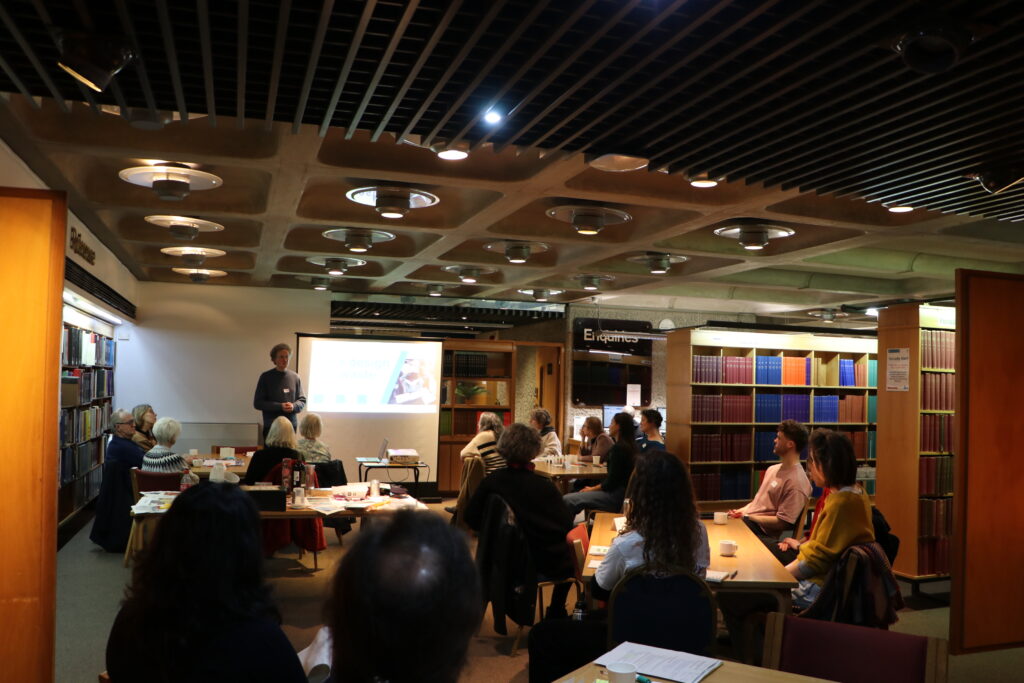
Jointly scoping focus points for new activities
One main opportunity we were keen to explore was establishing a local workshop space for making and repairing run by residents for residents. We wanted to hatch plans together for a new project. But although such a plan was clearly supported, it turned out we needed to have a broader conversation as well, about how we engage and collaborate with each other, as representatives of different types of organisations and communities, with each our own roles, capabilities, knowledge and networks as well. We discussed the need to have an ongoing conversation between us, if we really want to collaborate. Unfortunately it is still quite rare to have such a diverse group of people discuss climate related issues and actions.
Nurturing many initiatives, rather than waiting for a grand masterplan
We concluded that many small(er) things coming together can build big things if you take a holistic view, as climate issues require. Greening a street addresses not only the need for cleaner air and cooler temperatures, but also mobility and health issues if that street becomes more accessible for pedestrians and cyclists, and less so for cars. Actions add up, and this is where citizens can all contribute. You do not need to wait for a grand masterplan that aligns all local authority departments. You need to start and nurture many initiatives. “The next big thing will be many small things,” as designer Thomas Lommée said.
Creating maps to enable zoomed in and zoomed out perspectives
Making visible what is happening, already done or available, and what needs to be done is essential though. That’s why we want to engage in mapping these things in our neighbourhood now, with and by residents. This will create another conversation piece that makes collaboration easier as we will have more clarity on what we can work with, and where we could focus our efforts. The specific projects that make a difference, like the Library of Things, or the bike storage we improved on Golden Lane Estate remain equally important though. As we as design researchers at Stby know, zooming in and out is essential if you want to take action but also want to know where that action can take you.