AI & Design Research

Since the breaking news of ChatGPT flooded all over the media, we have been watching this trend and where it might take us. Though it is totally exciting that machine intelligence could finally achieve a form that humans recognise as similar to human intelligence, we are also aware that there are issues and limitations. We spent a some time looking into the basics of this technology development, discussing with peers in the field its implication to our practices, and trying out new tools that fit into our workflow. 

The basics of how AI works

Firstly, we looked into the fundamental principles of how AI works and also how this new wave of generative AI works in particular. We dived into the 3 fundamentals of AI development: neural networks, data and computing power. And learnt how these reveal the possibilities of this new wave of AI tools (literally dozens of them are popping out …

Using Videoboards as an all-in-one analysis tool

We recently completed an R&D project with Reduct — a video editing platform, to explore how we might use it as a research analysis tool. We did some experiments with our research partners for a global project and consulted the Head of Design at Reduct to discuss some of the feedback we gathered in the process. Overall we are excited about Reduct’s Videoboard as an all-in-one place for research analysis and are keen to continue trying it out. Below are some of our main observations:

Before these experiments, we had already used Reduct to make quick video reels for a few projects. We were recently introduced to a new feature: the Videoboard. It merges online whiteboards with video editing. Alongside the already powerful features for highlighting and tagging, Videoboards make it possible to analyse video content visually. So this is where we focused our experiments.

Visual

Using physical prompts in remote research

The art of making always fascinates us as design researchers. And we should also never overlook the creativity people have to offer as research participants. Even in a remote research setting, a simple element of physical making opens up an extra dimension to the stories we collect as data.

In this world where efficiency and fast-pace seems to dominate all aspects of our lives – including design research – it’s worth creating moments that allow participants to pause and think about the stories that reveal relevant aspects of their lives, feelings, and deep emotions through a bit of physical story making. With research becoming more and more hybrid, we have been experimenting with what that means for co-creation.

Offline co-creation with physical prompts
STBY has a long tradition of bringing design elements to our research activities. We always have so much …

Just Do Good

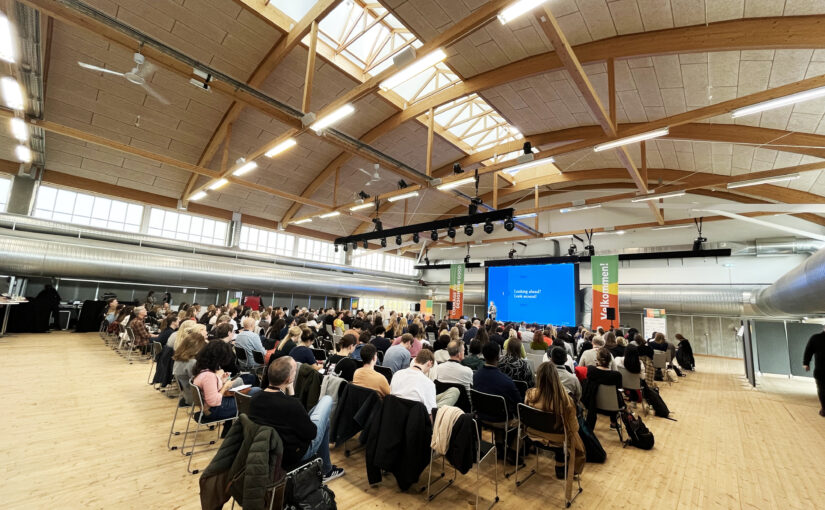
In October, Strategy Director of STBY, Geke van Dijk, and myself, Katy Barnard, a design researcher at STBY, attended the Service Design Global Conference in Copenhagen held by the Service Design Network. The theme of the conference was: Courage to Design for Good. We heard talks about climate change, bias, capitalism, gender-equity and more – each speaker telling stories about when they have had to be brave in their work to stand up for what is good.

It was refreshing and exciting to see the service design industry speak so explicitly and honestly about such impactful topics. These ideas trickled into conversations amongst colleagues attending the conference and those back at the office.

Nyhavn in Copenhagen. Photo Courtesy of Katy Barnard.

I see a shift – or an awakening, rather –  emerging in design that pushes practitioners to take responsibility for creating…

Hybrid research: a way to provide more inclusive and meaningful participation

Hybrid is commonly defined as a combination of two different things. A mixture of different elements, like with plants (combining seeds) or fuel (fossil/electric) or the arts (physical and digital elements). At STBY we have started defining Hybrid Research as a mix of in-person & remote contact with people involved in research. 

With studios in both the United Kingdom and the Netherlands, a number of international clients and being part of the global Reach Network, STBY has been working in a hybrid way for many years. During the pandemic we had to intensify our remote working skills, which provided both new opportunities and challenges for doing hybrid research. Today hybrid research is even more deeply embedded as a way of working and, because of this, we want to make some of these practices explicit to colleagues and share them with other designers and researchers.…

What user-centred design can bring to public consultations

Some in the infrastructure, architecture and construction worlds don’t like or trust consultations. They can be seen as tick-box exercises that get in the way of a good design and build. But we think they’re great. Done right it’s an opportunity to learn from the community in a way that will reduce the risk of future failure. What’s more, doing consultations in the right way can build understanding and buy-in with the community.

Co-creative consultations build understanding and consensus

With big projects in the community strong feelings can arise on all sides. But these feelings often deepen and entrench because people don’t feel like they’ve been heard as things progress.

When we run consultations we make sure to get to the heart of the matter for each person who participates as quickly as possible. Once people have said their bit and we’ve made a record of that they’re suddenly…

Let’s talk about meaning and purpose rather than impact and results

When we are asked to present our work and talk about the ‘results’ and ‘impact’ of projects we work on, it is often difficult to pinpoint and demonstrate. I’d like to make a case for embracing an alternative perspective: let’s talk about purpose, intent, direction and meaning. This is a suggestion I recently made when I was invited as a guest speaker at the Service Design Drinks Berlin. We had a good conversation about it, so I thought to follow it up with this further note.

We need to learn how to better speak about the purpose and meaning of our work. We need to get better in embracing the fact that we don’t ‘own’ the impact and results of the projects we work on. Although we are often very engaged with the projects we work on, it’s the client organisations commissioning the work who are the owners and implementers of the results. However, as committed and highly involved actors in the projects,…

Reflections on our series of published books

Our latest publication Catalysts: Thoughts on Design Research for Meaningful Change is part of a series of books. It is the fourth book about design research we published over the years. What do the four publications Pioneers, Viewfinders, Explorers, and Catalysts have in common? 

1) They are all filled with reflection, stories and insights derived from real-world cases and hands-on project experience.

2) They are meant to spark a conversation among our fellow design researchers around the globe, and at the same time engage those working outside of this field, to consider the benefits of embedding design research in a wider (global) innovation strategy.

3) It shows how design research developed over the years, and how pioneers around the world lead the way.

Our motivation for publishing books about design research has always been to share knowledge and experiences…

Catalysts: A Reach Network collaboration

In collaboration with partners from the Reach Network for Global Design Research we published: Catalysts, Thoughts on Design Research for Meaningful Change. The essays in the publication do not represent a monocultural view. Nor do they agree on a specific notion of design or research. They rather offer a surprising wide range of observations on the various ways that design and research are contributing to many different meaningful change processes.  

The co-authors of the various essays in this publication are all partners in the Reach Network. A global network of agencies specialised in human-centred design research and service innovation, working with businesses and non-profit organisations around the world. With this publication, we provide an inside look at how research and design practices are contributing to meaningful and positive change around…

The books we read

At STBY we all love to read. Reading widely is not only pleasurable in itself, it also enables us to learn new things which often helps us to excel in our work. As design researchers we are often working on a broad range of topic areas, which to an extent is reflected in our personal book preferences. Below you can find some of the books that the STBY team are currently enjoying reading. We hope that within this selection you too find some inspiration for the next book to add to your reading list. Happy reading!

What Geke reads: The new reason to work. By Roshan Paul and Ilaina Rabbat

“This book is about the purpose of work. How does our work contribute to meaningful change? This is something I care about a lot, and a topic we have discussed a lot in STBY as well. The authors are both experienced and committed changemakers. They have worked in different sectors (international development,…

Designing our research deliverables

Last year we had an interesting discussion at STBY about how we design our research deliverables. The conversation was inspired by a presentation from Joanna Rutkowska, where she presented a toolset developed as part of her PhD project. In her research, one of the key questions she asks is: If your research deliverables are design objects, what would they be?

Jonanna offered a set of metaphors to help approach this in her thesis in the image below:

Image created and shared by Jonanna Rutkowska as part of her presentation to STBY.

What Jonanna offers is a simple and lovely way to shift our viewpoint to look at our deliverables. What quality do we want the ‘things’ we deliver to present? What else can we deliver to the design team alongside a report to make our insights playful, experienceable, or inspiring? When we emerge from analysis and synthesis after days of fieldwork, what can…

The books we read

At STBY we all love to read. Reading widely is not only pleasurable in itself, it also enables us to learn new things which often helps us to excel in…

Designing our research deliverables

Last year we had an interesting discussion at STBY about how we design our research deliverables. The conversation was inspired by a presentation…

How to not become (too) cynical

As design researchers at STBY we are dealing with lots of complex issues and data. We are diving into root causes, problem areas and, luckily, also…

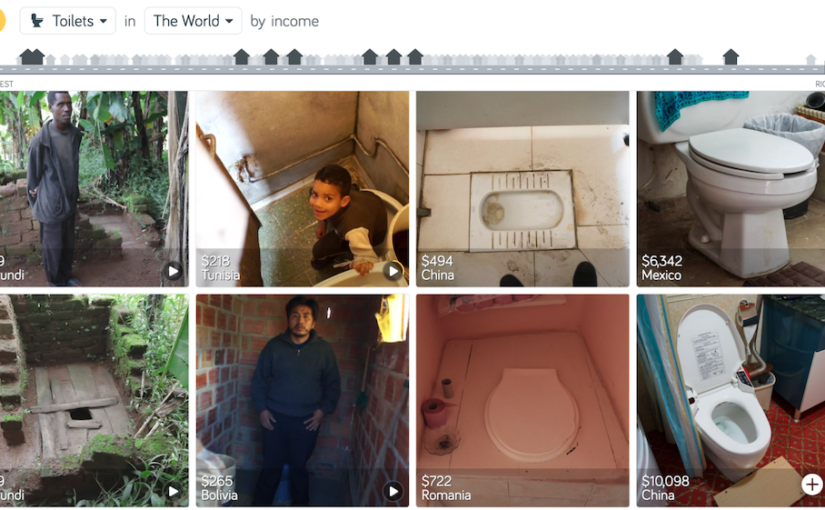
Where do you live on Dollar Street?

Are you bamboozled by the daily pandemic statistics of your country? Or have you even tuned out? These numbers are designed to be super clear, and…