
Do you ever think about your digital carbon footprint?
At STBY, we live in a truly hybrid world now since the COVID-19 pandemic, even more than before. Two days at the office. Three days from home. Video calls every day. This is the new normal. And as a company with offices in two different countries, we are often calling to sync up on projects, check in with each other and work collaboratively via virtual meetings.
But how often do we stop to think: “How much energy am I using during this video call? What amount of carbon am I wasting during this work session? Can I reduce my footprint somehow?” Though we may not be able to see the impact, it is definitely still there.
Looking into our impact
Two of our team members interested in the environmental impact of technology decided to do some digging to uncover the reality of the situation and see how we could lower our digital footprint. The facts they found were astonishing.
The internet has significant carbon, water and land footprints. The data centers that make our Google searches, Miro boards, Slack messages, video calls and more possible take a lot of resources.
“Taking the median carbon footprint for the world (32 g CO2e/GB), data storage and transmission emits 97 million t of CO2e a year—roughly equivalent to the annual carbon footprint of Sweden and Finland combined.
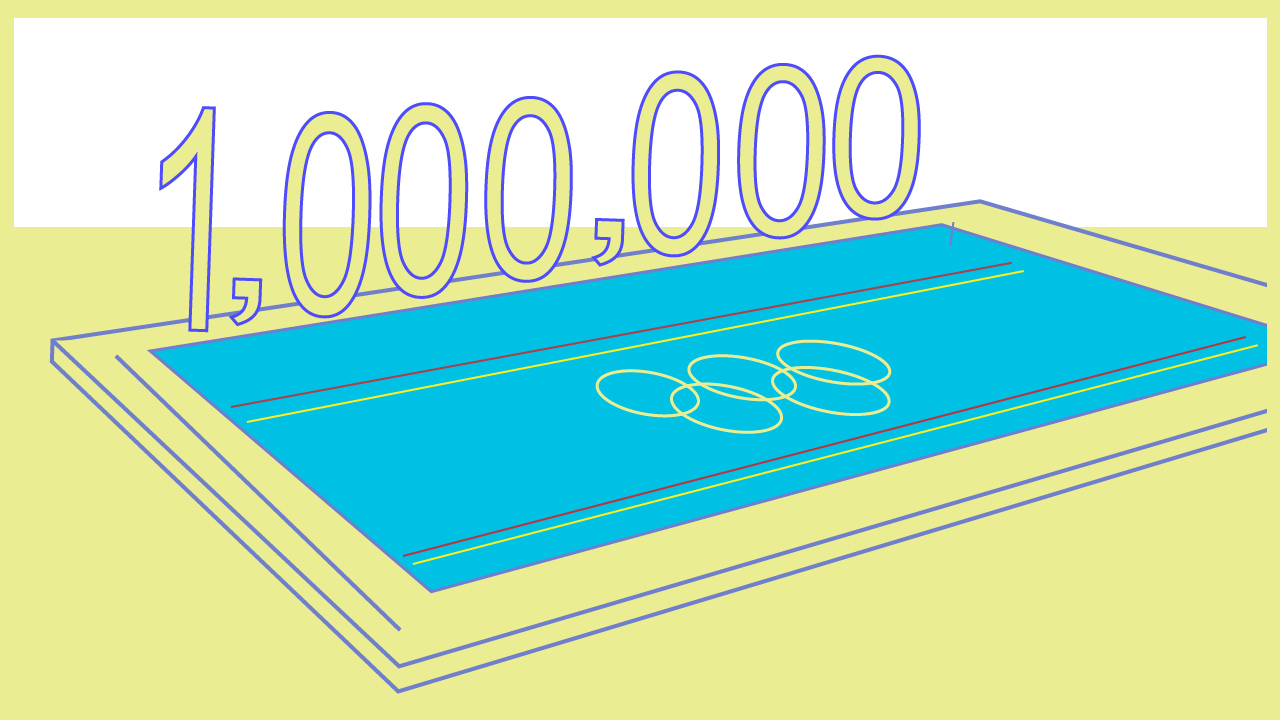
Similarly, the median global water footprint of Internet use is estimated to be 2.6 trillion L of water, or the equivalent of filling over 1 million Olympic-size swimming pools.
Finally, the median land footprint of Internet use is approximately 3400 square kilometers of land, representing the combined size of Mexico City, Rio de Janeiro, and New York City.”
–The overlooked environmental footprint of increasing internet use
Taking action
So, what can we do about this? Because, of course, we still need to get on with our daily activities. Luckily, there are a few simple things that already make a huge difference:
1. Turning off your camera can have a 96% overall footprint reduction
2. Changing your video from HD (high definition) to SD (standard definition) can have up to a 86% footprint reduction.
3. Not using a virtual background (blur or graphic) can save up to 18% electricity.
We brought these facts to the STBY team and thought, ‘well, these seem pretty doable’! But the first point brought up a new discussion. In our work, it is sometimes important to have our cameras on – for example, to feel connected with our colleagues, know that people are listening, read people’s facial expressions, create and maintain positive relationships with clients and participants… Feeling connected and valued is also very important, and seeing someone else’s face has a big impact on that. Only focusing on turning off the camera to lower the environmental impact ignores our other interpersonal and relational needs, so finding a balance is key.
Our new house rules
This led us to create a new STBY internal practice: Cameras stay on when we are in a call speaking directly to the other(s), but cameras go off when we are using video calls to connect and work together in another document (e.g. working on a slide deck together, doing a presentation, working in Miro…). We also decided that quick internal meetings to clarify points on a project could now be done via audio messaging in Slack (Slack Huddle) instead of making a Google Meet video call.
We are in the midst of trying out these new practices and letting the reality of the environmental impact of the internet sink in… We’d like to challenge you to bring these important topics to your team and see how you could implement new practices in your everyday work, too!
Images created by Sophie Hanton, STBY London intern 2023