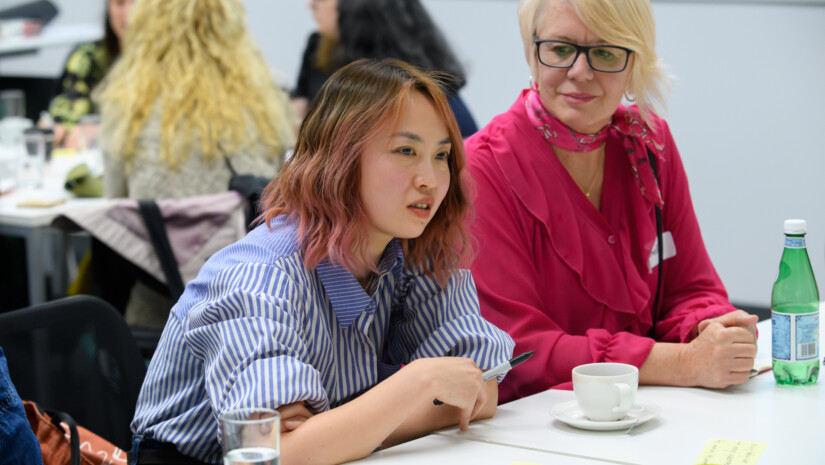
I’ve just come up for air after attending three different gatherings where I shared some early insights from our Teaming with AI project. At Stby, we’ve been deep in two rounds of diary studies, asking people from all sorts of sectors to observe themselves and their colleagues to see how AI actually impacts teamwork, social relationships, and the way they work together.
We recently finished our second round of analysis, and four clear themes emerged: trust and transparency, efficiency and overwhelm, the evolution of learning, and purpose and passion at work. Sharing these stories with different audiences has been a continuous learning journey for me, and it really helped ground our observations in a few different realities.
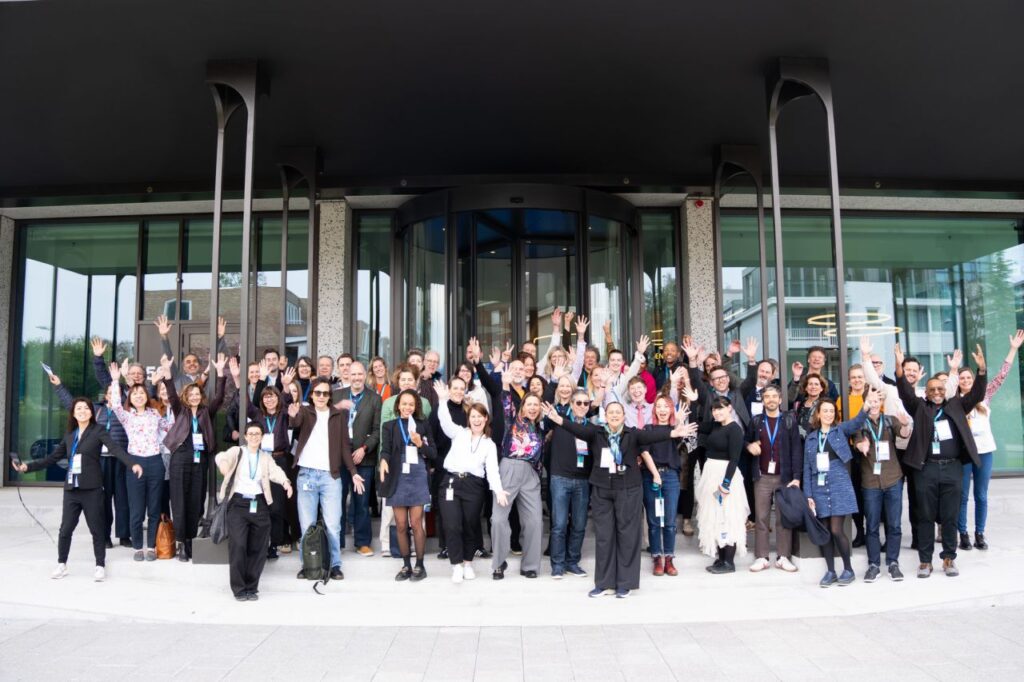
1. DMI conference in Amsterdam: The Future of the Design Profession
My first stop was the DMI European Conference in Amsterdam. Speaking to a room of design leaders, heads of design from global agencies and in-house teams, the conversation quickly turned to how learning is evolving.
Traditionally, we look at professional development as a singular line; you start as a junior designer and work your way up to a senior level as your expertise grows. But AI is changing that. Now, a junior can utilise AI to develop multiple types of expertise in a very short span of time. This raises huge questions for hiring and promotion:
- How do we measure AI proficiency alongside measuring years of experience in doing “the design work”?
- How do we set career development goals that explore complementary skillsets to expand what a “designer” can mean in a team?
We also talked about purpose. One speaker shared how he left a previous role because the company’s values didn’t align with his. He argued that AI should be brought into work to empower teams to embrace care, empathy and the human capacities, which sit beautifully in line with our insights. How to work with human agency in the human-AI collaboration has been a highlight of this gathering for me.
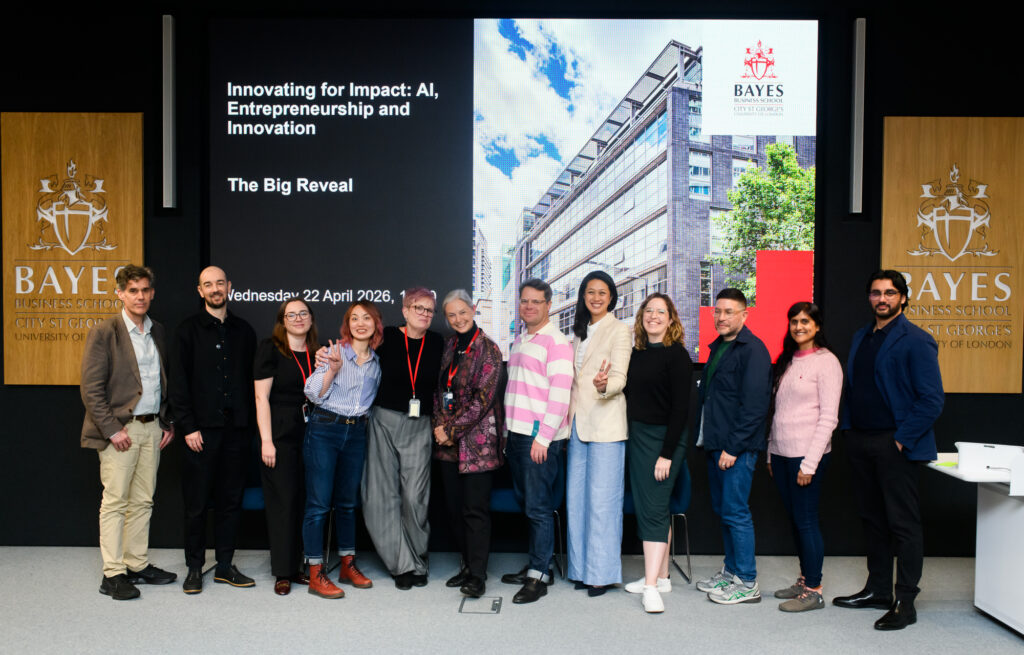
2. Designing Tomorrow at London: The Bottom Line and the Cost of AI
Next, I presented at Bayes Business School to a group of entrepreneurs and professional managers (many graduated from their MBA programmes). Their perspective was much more focused on the bottom line.
We had a fascinating revelation about the true cost of AI. It’s not just the subscription fee; it’s the token cost. Every time an employee or customer interacts with an AI agent, it costs the company money, regardless of whether the answer is brilliant or a poor-quality, biased hallucination.
But there are also invisible costs:
- Social Capital: More time spent with an AI means less time spent with your human colleagues, so what does it mean to your collaboration, trust building, and mental health?
- Environmental Cost: A cost that, right now, is missing from the calculation. For every responsible business that’s seriously considering adopting AI at scale, this remains a blind spot.
We often hear promises of hours saved, but our study suggests that for knowledge workers, those savings are often eaten up by the need to trace back and validate what the AI has produced. We even heard complaints that hours saved by one team member could mean more hours spent by other team members to go through the ‘slop’ produced by mindless colleagues! So really, many organisations that are early adopters of AI are now realising the cost of AI is not as low as they initially imagined.
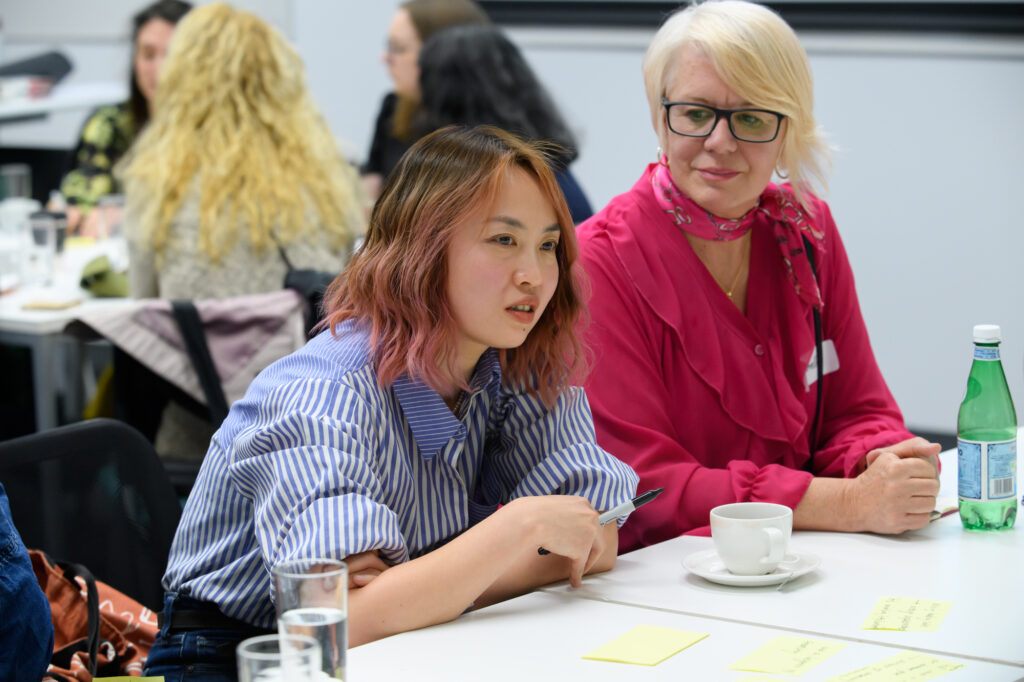
3. OD Connect: The Hardcore Reality of Large Orgs
Finally, I spoke with OD Connect, a group focused on organisational development, some embedded in the HR function of a large organisation, some in business strategy line of work and some coaching organisational restructuring processes, etc. This was a reality check. While those of us in the creative bubble might feel tech-savvy about the wide adoption of AI, many who work at large public sector organisations are completely unequipped for the arrival of their AI colleagues.
I heard a story from a worker in Wales for a healthcare organisation who said Copilot just appeared on her Microsoft Office one day, with no explanation, no guidance, and no training. People are left to their own devices, doing simple solo experiments and often getting unsatisfying results. Another story came up in response to the above comment, saying that the few who did take on AI training from the government find it disconnected from their actual line of work and therefore conclude it’s a waste of time.
This brings me back to the question I often start my conversation with every professional group I meet:
How do we bring AI into the human workflow (AI in the loop), rather than trying to fit humans into the AI workflow (human in the loop)?
Bringing Autonomy Back
AI is definitely going to stay and become normalised in our work, but maybe not in the exact way the big tech companies have promised.
My goal now is to take these reflections and turn them into practical advice for Stby. We want to help our clients and partners bring some autonomy back into their own hands, so they can look at this technology and decide for themselves how they, as a profession and as human teams, are going to work with it in a way that is relevant, ethical and efficient.
By Qin Han